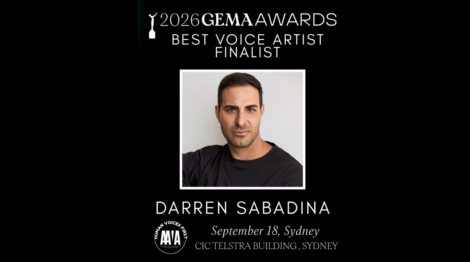

BRISBANE, Australia—I’ve spent nearly two decades working in sound design and voice-over, and for almost half that time my focus has been “Bluey.” I lead sound design on the show and voice Uncle Stripe, working between my home studio and my studio at Folklore Sound in West End Brisbane on a series that started in Queensland and has grown into one of the most-watched children’s programs in the world.
My brother Joe created “Bluey” with a clear brief: No exaggerated cartoon effects, just an organic soundscape built from the sounds kids actually recognize from their own backyards. That direction has shaped nearly everything about how I work, and for almost the entire run of the show, the tool I reach for most is the Sennheiser MKH 416 shotgun microphone.
One Career Constant
My path into voice-over happened almost by accident. I was working at a postproduction house as a sound designer, spending my days recording other people, when a director walked in one day and asked me to step up to the microphone and read an advertisement myself. That one moment changed the direction of my career, and the microphone that has stayed with me through nearly all of it has been the 416.
I first used the 416 at postproduction house Cutting Edge, where it was the standard microphone for commercial voice-over recording. In 2016, I bought my own for my home studio, where it remains in daily use. I now own three. In Australia, the 416 has long been the benchmark for commercial voice-over work, and once I began using it on “Bluey,” its directional control and durability made it an obvious choice.
Capturing the real sounds of suburbia means stepping out of the studio and into unpredictable environments. I frequently do what I would call “guerrilla” field recording, using the 416 to capture audio directly from the locations reflected on screen. For slides down playground equipment, I want the real sound, which has occasionally meant climbing into large enclosed slides with the 416 in hand, banging around to capture real physical movement.